Ending water service is usually simple, as long as you do it at the right time and in the right way. Most surprise fees come from three things: missing the renewal deadline, cancelling mid-term, and not returning bottles and equipment. This guide walks you through it.
This is general information, not legal advice. Your agreement's own terms are what apply.
Step 1: Find your agreement
Look for a signed service agreement, an order form, or terms and conditions linked from your account or invoices. If you can't find it, call or email your provider and ask for a copy, plus three specific answers:
- When does my current term end?
- Does it renew automatically, and for how long?
- How much notice do you need to cancel, and in what form?
Step 2: Check for automatic renewal
Many water and cooler agreements renew on their own. One published agreement, for example, starts with a 36-month term and then "shall renew automatically for succeeding terms of 12 months" unless the customer gives written notice at least 30 days before it expires. (Cintas water service agreement)
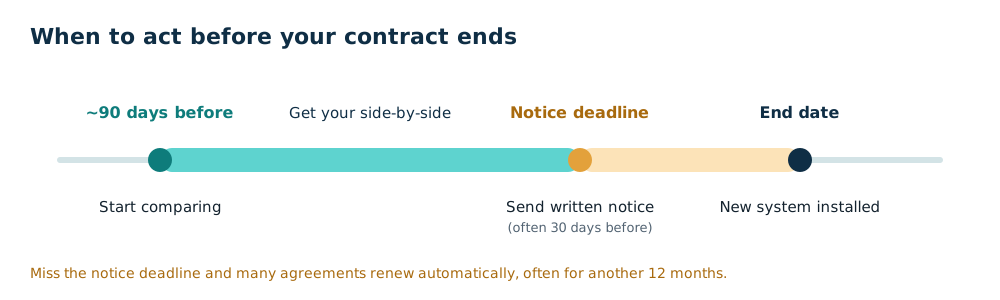
If your agreement works like that, the date that matters isn't the end date. It's the notice deadline before it. Miss it, and you could be locked in for another full year.
Step 3: Know what leaving early costs
If you cancel before the term ends, many agreements charge you anyway. In the same published agreement, cancelling early means paying "all remaining Monthly Service Charges owed through the end of the then-current term," plus $200 per unit for removal and restocking. (Cintas water service agreement)
If you're mid-term, compare the cost of leaving now with waiting it out. Often the smartest move is to get a comparison now and schedule the switch for the week your term ends.
Step 4: Give notice in writing
Even if your agreement doesn't require it, put your cancellation in writing so you have a record. Include:
- your business name, account number and service address,
- a clear statement that you're cancelling (or not renewing) service,
- the date you want service to end,
- a request for written confirmation, and
- a request to schedule pickup of their coolers and bottles.
Send it the way the agreement says: email, mail, or certified mail. Keep a copy and the confirmation.
Step 5: Return bottles and equipment
- Bottles: Return every jug, full or empty, so you get your deposits back. Deposits often run about $6 to $7 per bottle. (ThePricer) Ask for a receipt with the bottle count.
- Coolers: Rented coolers belong to the provider. Some agreements say you can't disconnect or remove the units yourself, so let them do it and get a pickup receipt.
- Lost bottles or equipment: If anything is missing, ask what the charge is before the final invoice arrives.
Step 6: Check the final invoice
Your last bill should show returned deposits as credits. Look for charges that shouldn't be there: deliveries after your end date, rental for coolers already picked up, or early termination fees you didn't expect. Dispute them with your copies of the notice and pickup receipts.
Step 7: Don't go a day without water
Time your new service so it starts as the old one stops. If you're switching to a bottleless cooler, schedule the installation for the week your jug service ends, and keep a few full jugs until the new cooler is running.
Switching to bottleless? We'll time it for you
GoJugFree matches your business with one vetted local bottleless provider that puts one flat monthly rate in writing, includes filter changes and sanitizing, and schedules the installation around your current contract. Tell us when your contract ends, and run your numbers in the savings calculator to get your personalized report and switch plan.
Before signing a new agreement, ask the same questions about term, renewal, notice and early termination. Here's how bottleless and jug delivery compare.